Clearing Oxidized Lenses Without Housing Replacement
Headlight Restoration in Portage for vehicles with cloudy polycarbonate lenses reducing light output and appearance
Polycarbonate headlight lenses yellow and cloud over time as ultraviolet radiation breaks down the plastic surface, creating a translucent barrier that scatters light instead of allowing it to project in the designed beam pattern. Headlight restoration performed by Platinum Touch Detailing LLC addresses oxidation through controlled wet sanding, polishing, and UV-resistant protection application, restoring clarity without the cost of complete housing replacement. The service targets aging vehicles where lens degradation has reduced both nighttime visibility and overall appearance, offering a practical alternative when the housings themselves remain structurally intact.
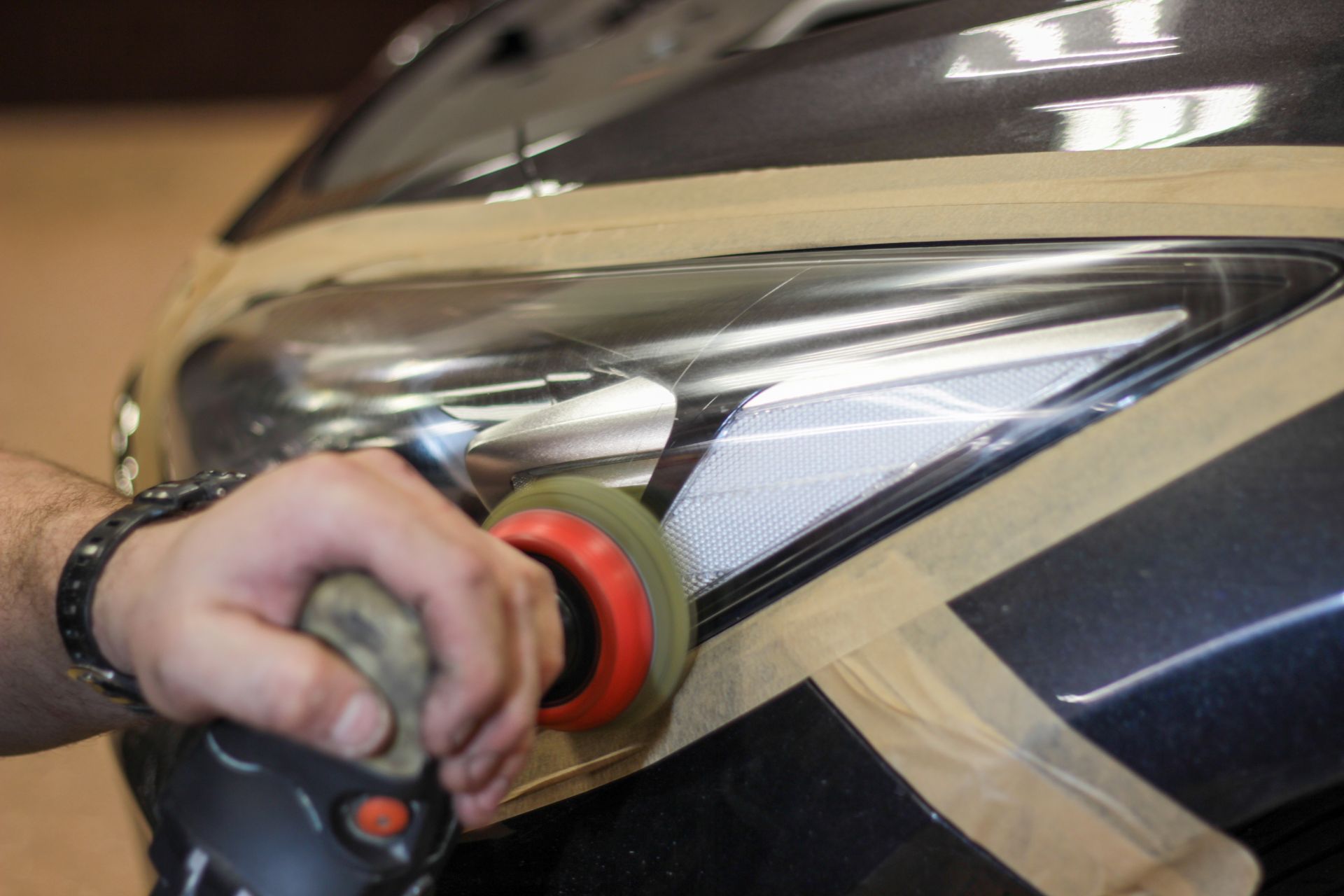
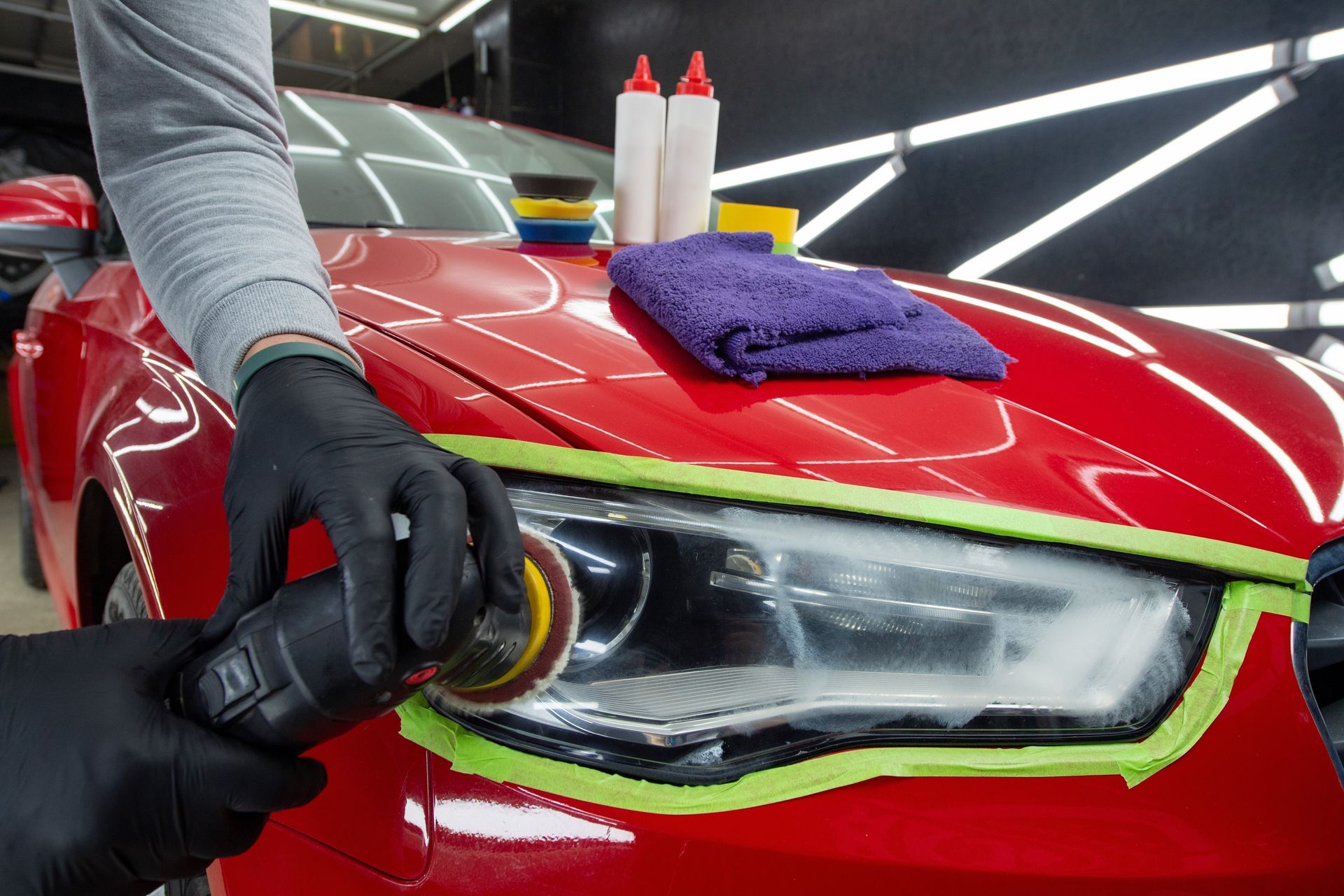
The process begins with masking adjacent paint and trim to prevent accidental contact during sanding, since the abrasives used on polycarbonate would damage automotive clear coat. Wet sanding removes the oxidized outer layer in stages, starting with coarser grits to eliminate heavy clouding and progressing to finer grits that prepare the surface for polishing. Polishing follows with compound and buffing pads that restore optical clarity by removing the sanding marks and creating a smooth surface that transmits light uniformly. UV-resistant sealant applied after polishing protects the newly exposed polycarbonate from immediate re-oxidation, extending the restoration's effectiveness beyond what sanding and polishing alone would achieve.
Arrange a headlight restoration appointment to evaluate your current lens condition and discuss protection options.
What Proper Restoration Requires
Controlled sanding depth is critical because polycarbonate lenses have a finite thickness, and removing too much material can weaken the housing or create uneven surfaces that distort the beam pattern. Wet sanding keeps the lens cool and prevents plastic dust from clogging the abrasive, ensuring consistent material removal across the entire lens surface. Each sanding stage must remove the scratches from the previous grit completely before progressing to finer abrasives, or the deeper scratches remain visible beneath the polished surface, limiting final clarity.
After restoration, lenses transmit light more effectively, improving the usable beam distance and width at night and making your vehicle more visible to other drivers. The headlights regain a clear appearance that matches the rest of the vehicle's exterior rather than displaying the yellowed, aged look that draws attention during resale inspections. Platinum Touch Detailing LLC applies UV protection as part of the restoration process, creating a barrier that slows oxidation and extends the time before lenses begin clouding again.
Restoration does not repair cracks, internal moisture intrusion, or damaged reflectors inside the housing, which require complete housing replacement to correct. Lenses that have developed deep pitting or surface crazing from impact may not restore to full clarity because the damage extends beyond what surface sanding can address. The UV protection applied after polishing requires periodic reapplication, typically every one to two years depending on sun exposure, to maintain clarity and prevent rapid re-oxidation of the freshly sanded polycarbonate.
Questions About Lens Restoration
Vehicle owners typically ask how restoration compares to replacement and what results to expect from the process.
How does wet sanding remove oxidation without damaging the lens?
Controlled grit progression removes microns of degraded polycarbonate while water cooling prevents heat buildup that would melt or warp the plastic, allowing precise material removal that clears cloudiness without structural compromise.
What visible difference does restoration make in nighttime driving?
Cleared lenses allow the full designed light output to project onto the road rather than scattering inside the clouded lens, increasing the illuminated distance and improving peripheral visibility where yellowed lenses previously blocked light transmission.
Why do restored headlights eventually cloud again without protection?
Fresh polycarbonate exposed by sanding has no factory UV coating, making it vulnerable to immediate oxidation from sun exposure unless aftermarket UV sealant is applied to slow the degradation process that caused the original clouding.
When should you choose restoration over complete housing replacement?
Restoration makes sense when the housing structure, mounting points, and internal reflectors remain intact, but replacement becomes necessary when cracks, moisture intrusion, or reflector corrosion have developed beyond what external polishing can address.
What headlight conditions cannot be corrected through restoration in Portage?
Deep crazing from stone impacts, internal yellowing between the lens and housing, and melted plastic from bulb heat require replacement because these issues originate inside the sealed housing where external sanding cannot reach.
Platinum Touch Detailing LLC performs
headlight restoration at your location in Hammond, Portage, or surrounding areas, addressing lens oxidation through staged sanding and UV protection application. Contact the service to schedule restoration and improve both light output and vehicle appearance without housing replacement costs.